





In-Tay-twined: Scotland and South Asia connect at Verdant Works Museum
After two years in the making, the Dundee Heritage Trust team is delighted to announce the opening of its new In-Tay-twined gallery at Verdant Works Museum, exploring the deep connections between the Scottish and South Asian jute industry.
Created in partnership with local people, scholars, and descendants of a global industry, the project belongs to a generational effort to share these stories at the museum for current and future generations. Our Learning Curator, Kim-Turford Mowat, tells us more about how the project emerged and the vital role of partnerships in reimagining the gallery.
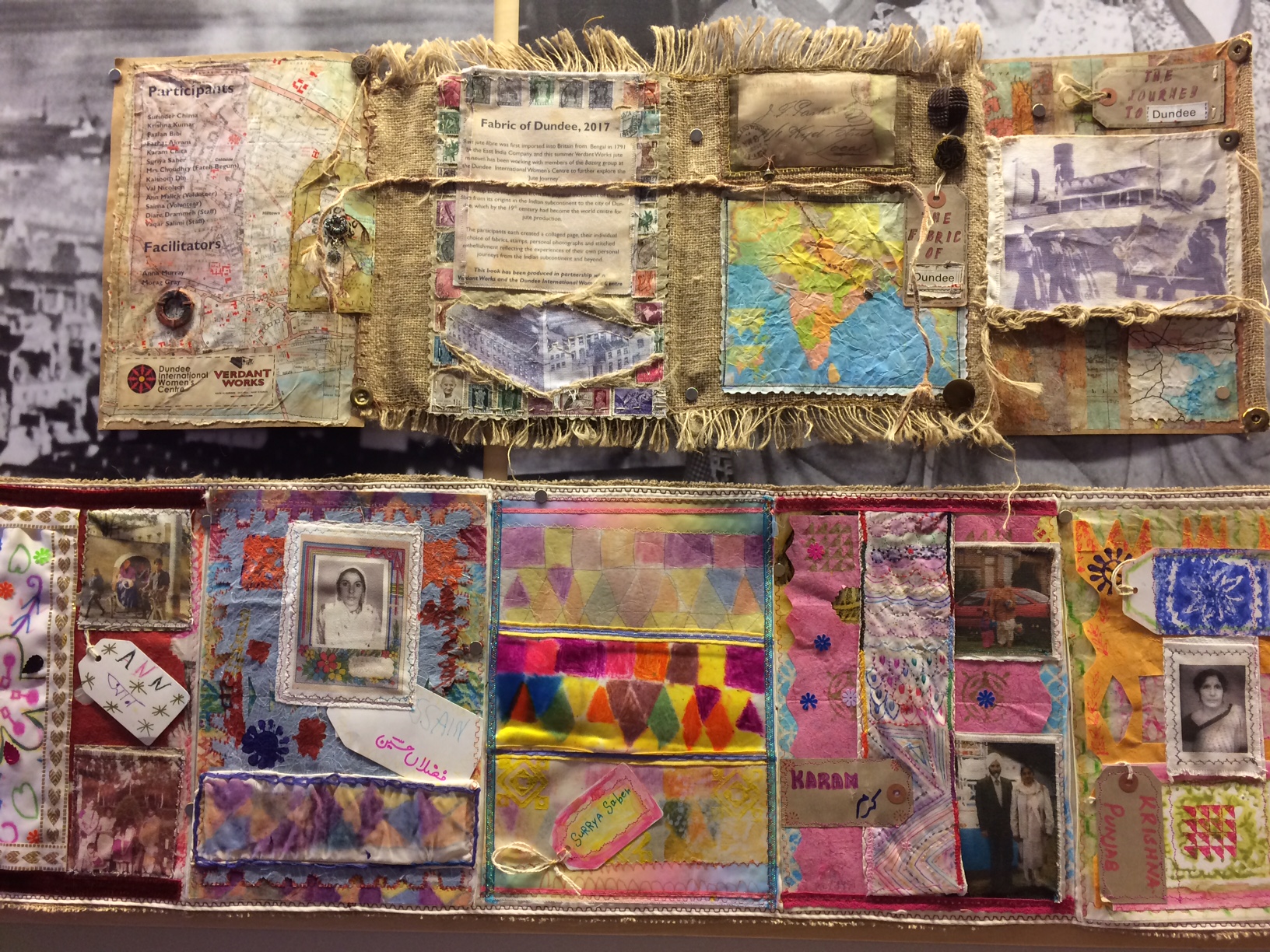
The museum’s last project with members of the local Indian community was in 2017. Yet since, COVID-19 and other economic shocks have made it difficult for many museums and groups to sustain long-lived creative projects. In 2023, we set out to welcome groups back into the museum again, with a view to invite a wider range of voices into our curatorial decision-making in a more lasting and durable way.
In 2023, Dundee Heritage Trust held some of its very first ‘Disruption Nights’ at Verdant Works Museum, a series of friendly and open events inviting visitors to explore the museum for free… in exchange for their honest opinion.
We learned so much from our participants in these events, as well as from the process of asking for feedback. Perhaps surprisingly, this isn’t always easy, as many visitors come with preconceptions about what they think a museum should be like and who they think should be responsible for its stories. Sometimes, it takes time for less experienced museum visitors to feel confident to express their views, even though theirs are often the most insightful ideas to help us adapt for a wider audience.
You can read more about our learning from the Disruption Nights from our case study on the Museums Association website here.
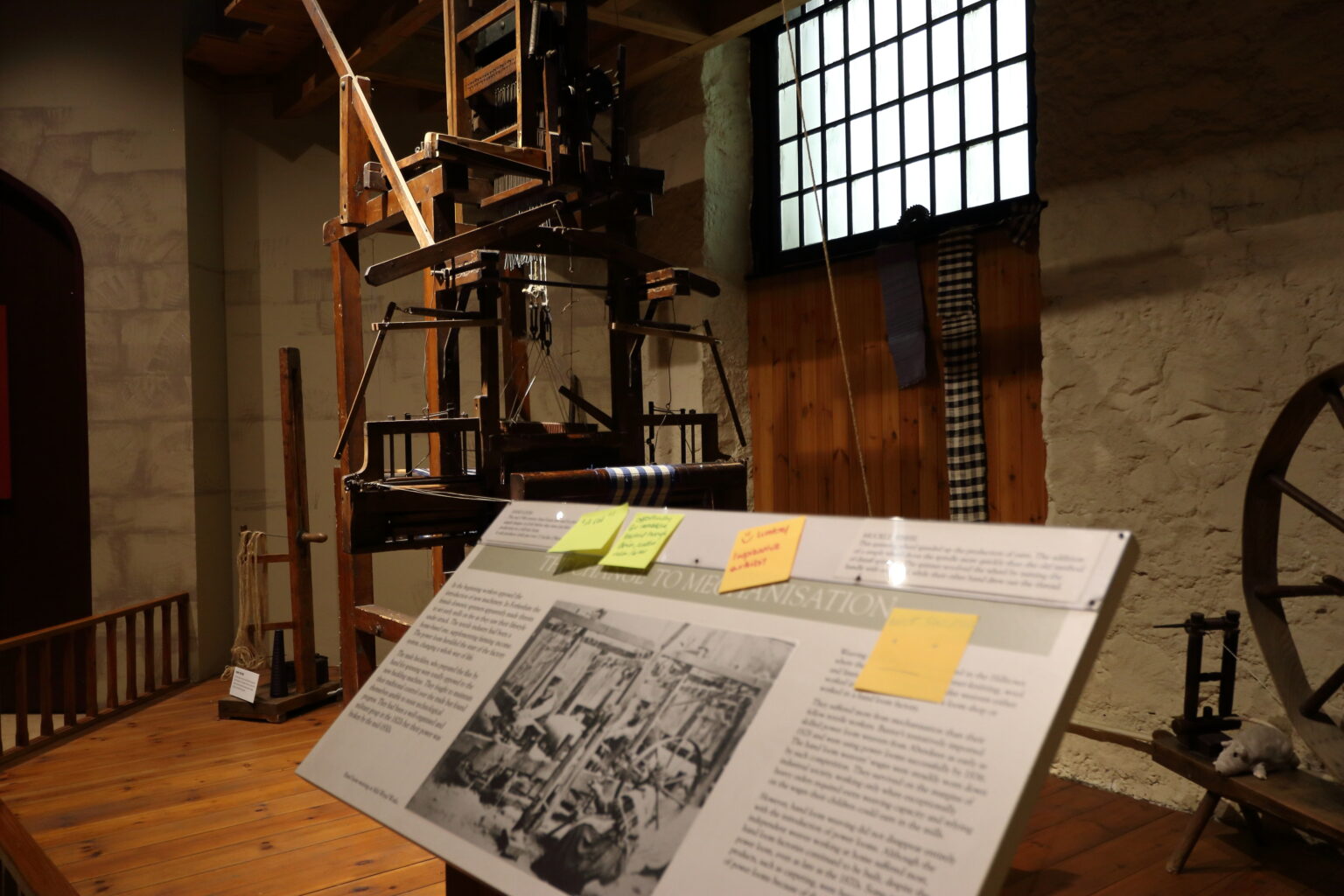
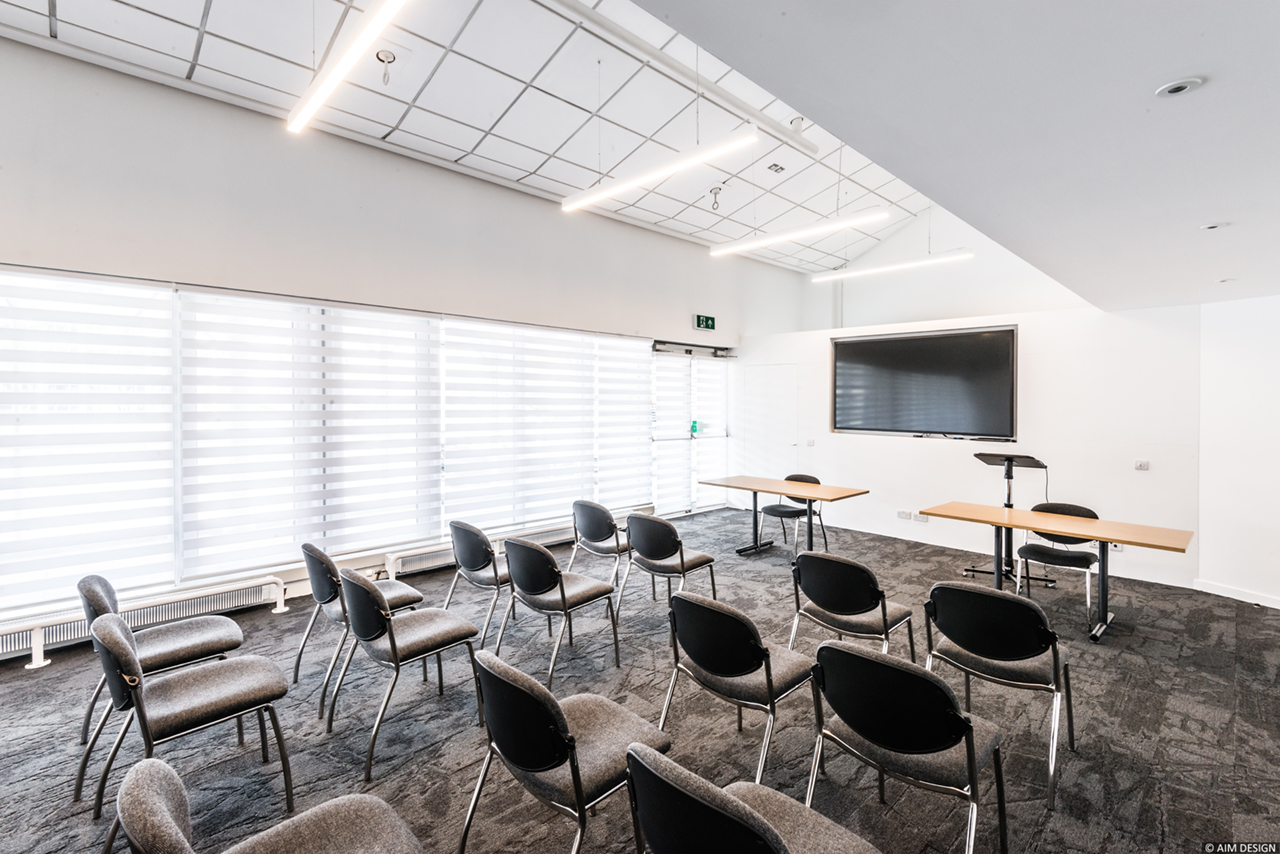
Post-it notes around the galleries from participants at one of our Disruption Nights in 2023. Feedback of all kinds was shared at these events, with imagination and conversation encouraged with live music and a relaxed atmosphere.
In 2024, thanks to the generous support of the Turtleton Charitable Trust, we were able to address one of the biggest challenges highlighted by participants in our Disruption Nights and other visitors to the museum for the very first time:
How could we share the global dimensions of the story of jute in South Asia, and the people who worked within the industry in Scotland from around the world, and make sure that these communities were properly represented in doing so?
Verdant Works had previously touched a little on the global jute industry, with its original “India” gallery telling the story of Scots who went out to India to set up and run the new mills, and the lives that they led out there. It was visually very different to the rest of the museum: a winding tunnel of elegant lattice, with photographs of colonial houses and garden parties. It was also a physically challenging space, featuring an outdated film elevated at an uncomfortable height above a doorway.
Our Disruption Nights had told us that people felt the space lacked the realities of Indians working under that system, and the impact that Partition had had in particular. As we embarked on a first stage of talking to communities about the project, we also began to learn more about what our visitors and relevant groups locally might like to see in the space, including who they wanted to hear from, and if they had any suggestions about who we should speak to.
As part of this process, we spoke with representatives from the Dundee International Women’s Centre, Dudhope Multicultural Centre, the Calcutta and Mofussil Scots Society, and academics from the Founders Project at the University of Dundee, the School of Social and Political Science at the University of Edinburgh, and the School of English Literature at Edinburgh Napier University, in addition to a number of enthusiastic independent researchers, who also shared their ideas and recommendations on the project.
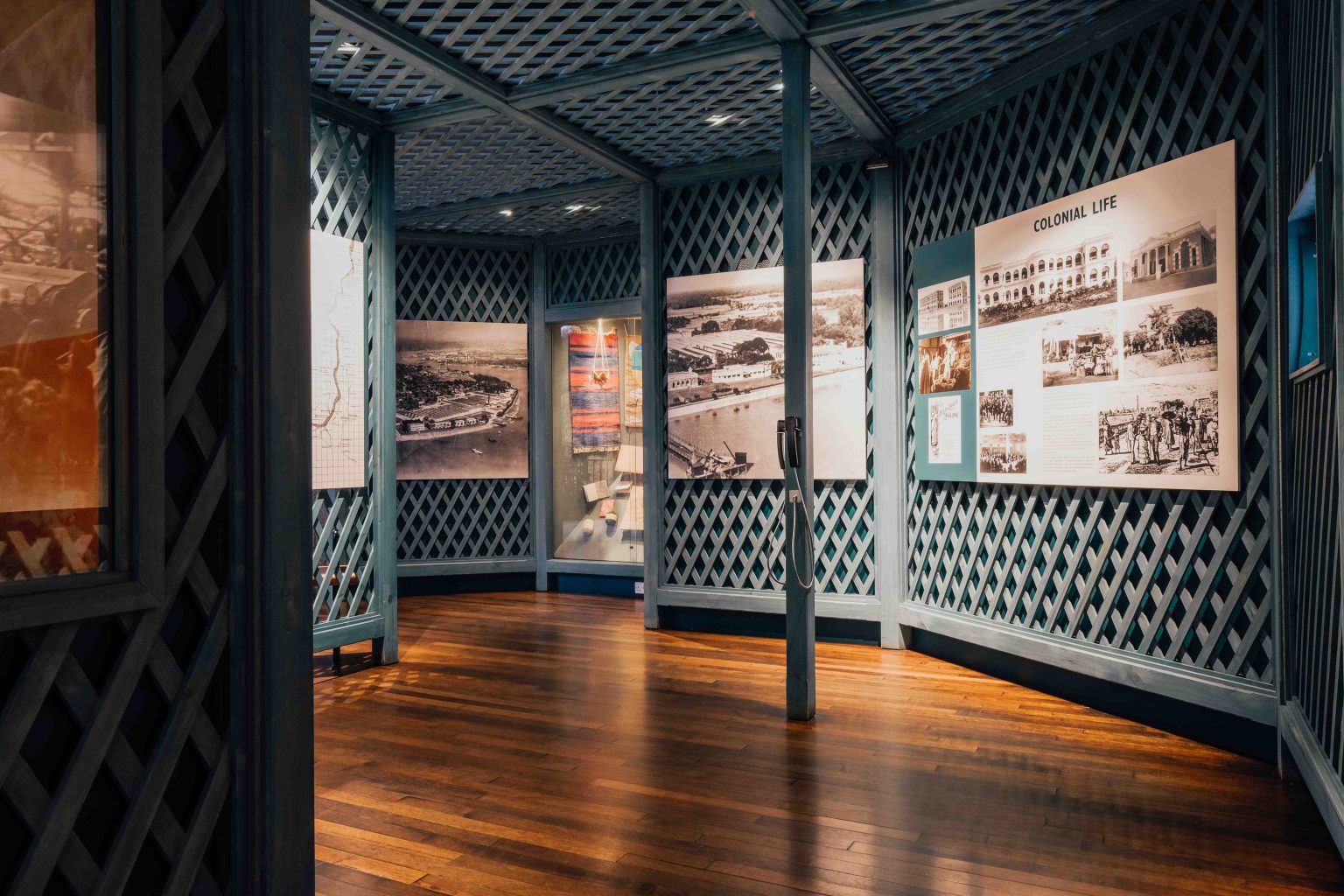
The museum’s original “India” gallery was developed almost 30 years ago, and was identified as one of the museum’s most outdated spaces. Although touching usefully on the history of Scots in the Indian jute industry, little was said about the experiences of Indian people.
With our partners to guide us, the next task was to set about research for the new gallery.
With the help of a few committed volunteers, we spent nearly a year researching around various themes, geographies, timelines, life stories, and the vast subject of Independence. Slowly but surely, an outline for the contents of the new gallery started to emerge.
However, we realised very quickly that this story was much bigger than it would be possible to tell in one part of the museum, and we would really need to introduce the South Asia connection much sooner in the museum for it to make sense for visitors: when we’re talking about jute being grown, when we’re talking about the industry booming, and especially when talking about the lives and work of people in the industry.
With thanks to two years’ funding from the Turtleton Charitable Trust, we were able to take this leap: putting into context how jute is an ancient crop grown in South Asia and turned into fabric and rope for millennia. We also took the opportunity to locate a diorama on Indian weaving alongside an authentic 1830s Scottish handloom, enabling us to talk more widely about weaving before the age of steam, and draw a connection between two vastly different yet both deeply resourceful parts of the world.
It is here the museum now also introduces the idea of the East India Company’s ‘economic drain’ on South Asia, as jute transformed from a small subsistence crop to a tremendous source of wealth for a city halfway across the world. This tale is told through the life of the Scottish botanist, William Roxburgh, who had approached his studies in the benign hope of finding crops that would help to improve food security.
Unexpectedly, in jute, he found a crop that could be grown on an industrial scale and sold cheaply to the Dundee mills, who were able to spin it into profits… A global industry was born.
Later in the museum, we were also able to introduce brand-new research about the first jute mills to be built in India, as the cheap costs of labour, transport, and coal began to entice Dundee mill-owners to move their manufacturing overseas, as well as how the boom of the South Asian industry heralded the decline of Dundee’s far earlier than most realise.
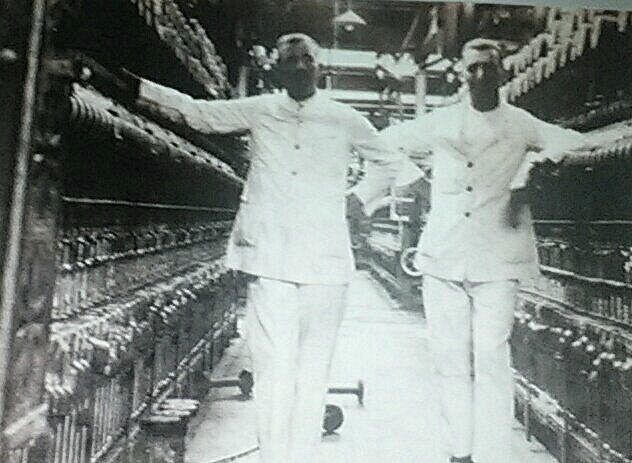
Typical Dundee “jute-wallahs” wearing starched white uniforms at Megna Jute Mill in Jagatdal, West Bengal.
This brings us to the new gallery itself, which we were beginning to understand as a place where the stories of Dundee and India were “in-Tay-twined” by the movement of jute and people from the River Hooghly to the Tay.
The space now goes far beyond the lives of the first Dundonians to work in India, but also explores the role of jute in the Independence movements of the late nineteenth century and beyond, including the reactions of the British State.
Whereas previously, we had not talked about Partition at all in the museum, it was clear from our conversations and research that this Partition was a pivotal moment in the story, not only for the history of both countries, but also for the history of the jute industry, our focus as a museum. The gallery now examines the impact that Partition had on Dundee, India, Pakistan and, later, Bangladesh.
And there are stories of individuals who took advantage of the opportunities to teach, to learn, and to travel through the jute industry. This included the Scots continuing to go out to India and witnessing the steady transition to a South Asian industry, but also vitally, the young men from India and beyond who made the long journey to Dundee, taking the same course at Dundee Technical College as the Scottish managers and mechanics before them, to take their own places in the industry’s future.
For some of our volunteers on the project, this story was one of real personal significance. For Anushua Biswas, who grew up in ‘Little Dundee’ in Kolkata in the 1960s, 70s, and 80s, taking part was a chance to deepen a connection with her own family history, and a place that felt very close to home:
“Verdant Works Museum has been a place of pilgrimage for many of us from Calcutta (now Kolkata) jute mills, especially those of us of a certain vintage. So, I was delighted to be invited to participate in its transformation of the India Gallery. My father, a keen photographer, captured a lot of his time in Dundee, while training at the Technical College in 1950s. I felt there was an opportunity for the Museum to include an Indian view of Dundee and the mills.
I felt very emotional in participating with Verdant Works; you can hear it in my talk on Growing up in Little Dundee at the museum. To be present in front of the very machinery he trained on at the College made me feel close to him. I’m sure my father would have approved of my collaboration while eye rolling at my sentimentality.”
You can read more of Anushua’s research into her father’s life in Dundee here, which will be published as part of her upcoming book.
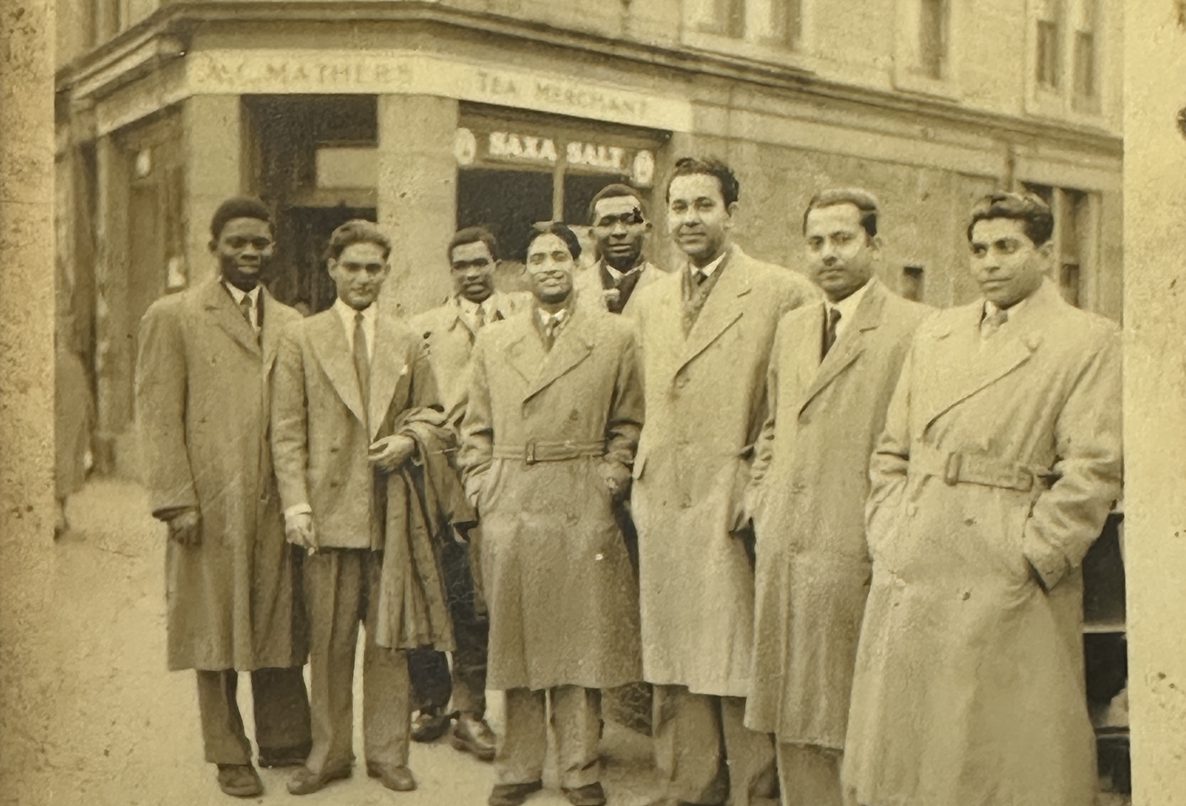
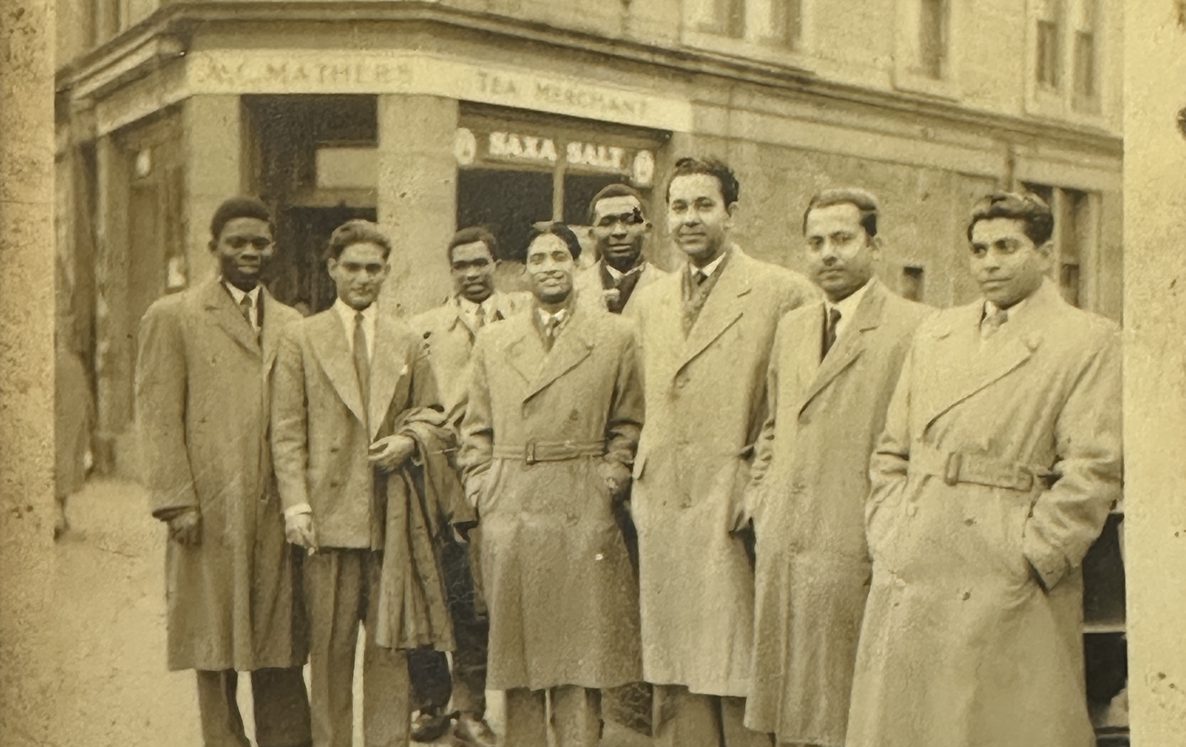
During the British empire and long after, people from across the world came to Scotland to work or train in the jute industry. These stories, previously untold in the museum, are at the heart of the new In-Tay-twined gallery. One of our volunteers on the project, Anushua, was delighted to share this photograph of her father, KD Choudhury (second left), and his friends during their time in Scotland.
Beyond the gallery itself, the In-Tay-twined project has also been a vital opportunity for partnerships at the museum.
During the work, our team had the good fortune of meeting two individuals, living in India and Scotland respectively, who were already travelling to investigate the current jute mills in India. Their research contributed importantly to the end of the new gallery, where we reflect briefly on the industry today and its connection to a global story of social, economic and environmental change.
Here, we explore how the industry in India is changing yet again, with new technologies and jobs at risk, declining conditions for workers, and global economic shifts affecting ordinary people’s lives, all themes already close to home for those familiar with Dundee’s own social history, now heard directly from Indian mill-workers, managers, and owners’ themselves.
Towards the end of the project, we also found that the Montrose Museum had commissioned a textile artwork exploring the connections between the jute industry and the East India Company, something which may come on loan to us later as our relationship develops.
Excitingly, thanks to a booster grant from Museums Galleries Scotland, we now also have the opportunity to introduce some artwork through the space. So our immediate next steps will be to work with an artist with a connection to the story to help bring to life the spirit of In-Tay-Twined: that Dundee and Kolkata are intrinsically linked, and we hope we can recognise this history together.
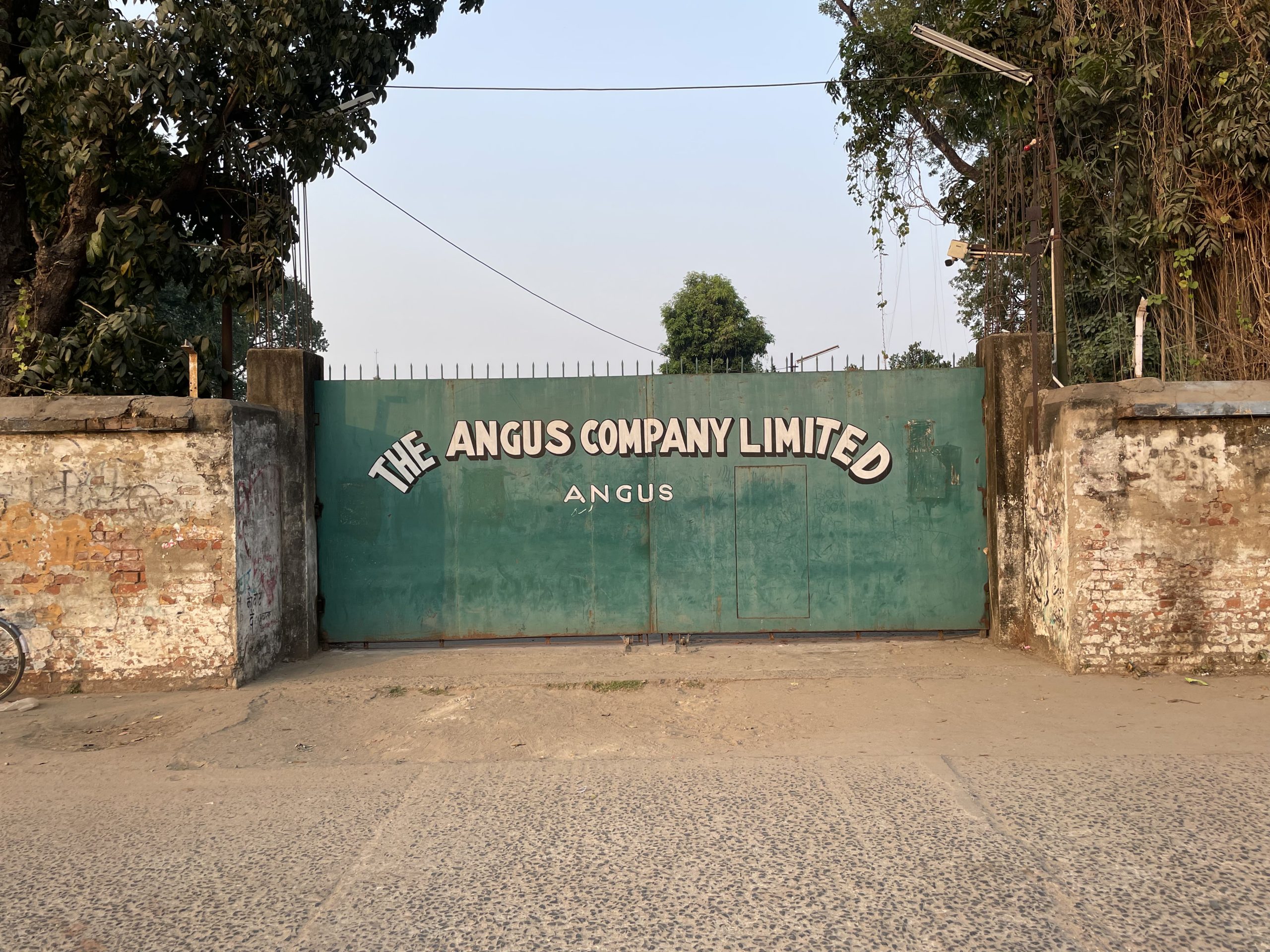
The gates of the Angus Jute Mill in Bhadreswar, Kolkata in West Bengal, India (2025). With thanks to Paramita Das and Gordon Shields.
The new In-Tay-twined gallery is now open to visitors as a permanent part of Verdant Works Museum, and is included with admission.
With our warmest thanks to Muhammad Ahmedullah, Dr Arunima Bhattacharya, Anushua Biswas, Paramita Das, Monica Duncan, Dr Hemangini Gupta, Prof Hari Hundal, Ken & Pat Miln, Tom Shepard, Gordon Shields, Sandra Thomson, and all of our local, national, and international partners who contributed their time, experience, and expertise to the project.
Our sincere thanks also to the Turtleton Charitable Trust for their kind and steadfast support of the project, and to Museums Galleries Scotland for helping us to take our next steps on the journey.
Curious about the project, working in partnership, or decolonisation at Verdant Works? Or, perhaps, you have your own stories of the Scottish and South Asian jute industries to share?
Our curatorial team will always be glad to hear from you, so please do get in touch with us.
-
 News06/03/2024Discovery Point
Top Dundee Visitor Attractions Receive Prestigious Education Award
Discovery Point and Verdant Works Museum awarded prestigious education award once again. -
Stories23/07/2024Verdant Works Museum
Dundee Climate Fund Supports Green Industrial Revolution at Verdant Works
Verdant Works has long been a symbol of the city’s jute industry. Today, it is undergoing a new green industrial revolution, supported by the Dundee Climate Fund. -
News04/12/2024Discovery Point
Dundee City Council 2025-26 Budget Public Consultation
Dundee City Council open a Public Consultation on their 2025-26 budget, with cultural attractions at risk of losing local council support.


Keep in touch!
You’ll receive exclusive insights into our work behind-the-scenes at Discovery Point and Verdant Works Museum, be first to know about upcoming events and exhibitions and, discover how you can help support Dundee Heritage Trust. You can unsubscribe at any time.