





RSA 200: Calum Colvin’s Polar Portraits
In 2026, the Royal Scottish Academy, one of the oldest and most prestigious cultural institutions in Scotland, marks its 200th anniversary.
Celebrations for #RSA200 are nationwide and involve hundreds of artists, partners, galleries and institutions across the country, in Scotland as well as across the UK. It is set to be the widest reaching project of its type in the UK with over 100 museums, galleries, and other cultural partners coming together to celebrate with their own events, major exhibitions, performances, talks and collection rehangs.
The project is designed to bring partners and communities together to celebrate the cultural history, presence and influence of the RSA and its Academicians across Scotland. Projects and activities stretch across the whole of 2026 and we are delighted to be a partnering organisation for this momentous celebration.
We are proud to be displaying two remarkable Polar portraits from our Collections for this celebration of art; Robert Falcon Scott and Roald Amundsen, by Scottish artist Calum Colvin. You can see the Polar pair together at Discovery Point in our Inspiration Gallery, until 2027. The display is included as part of standard museum admission.
On initial sight, the portraits appear to be paintings. However, as Colvin explains in this interview, they are complex photographs, using the centuries-old technique of trompe l’oeil; an optical illusion. Read on to learn more about the process behind these mesmerising depictions of two of history’s most recognisable explorers.
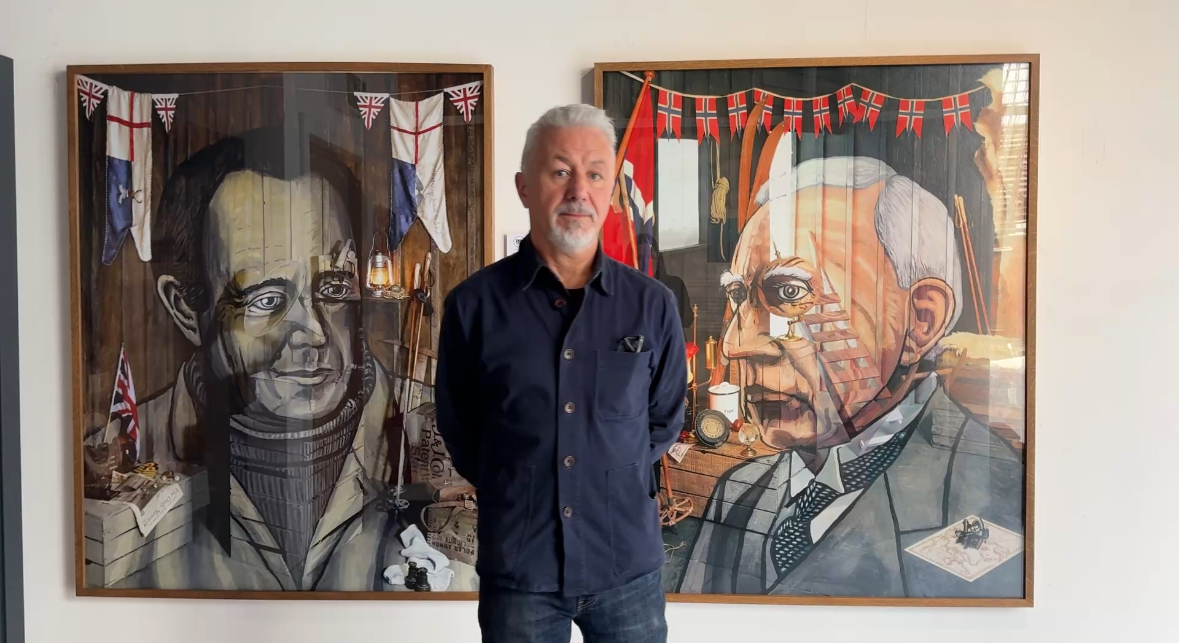
“My name is Calum Colvin. I’m an artist and a recently retired Professor of Fine Art Photography at Dundee University. I was commissioned to make these two portraits of Scott and Amundsen in 2017 by Malcolm Good and his conglomerate of Polar enthusiasts; we made an edition of pictures, of which the final one was donated to this fine museum here at Discovery Point.
“The first portrait we made was of Captain Scott. I didn’t know anything about Scott, so there was a lot of research to be done; a lot of visits to the Scott Polar Research Institute and lots of reading. I was trying to get an angle on how the pictures might be made, because these are not conventional portraits, these are photographs.
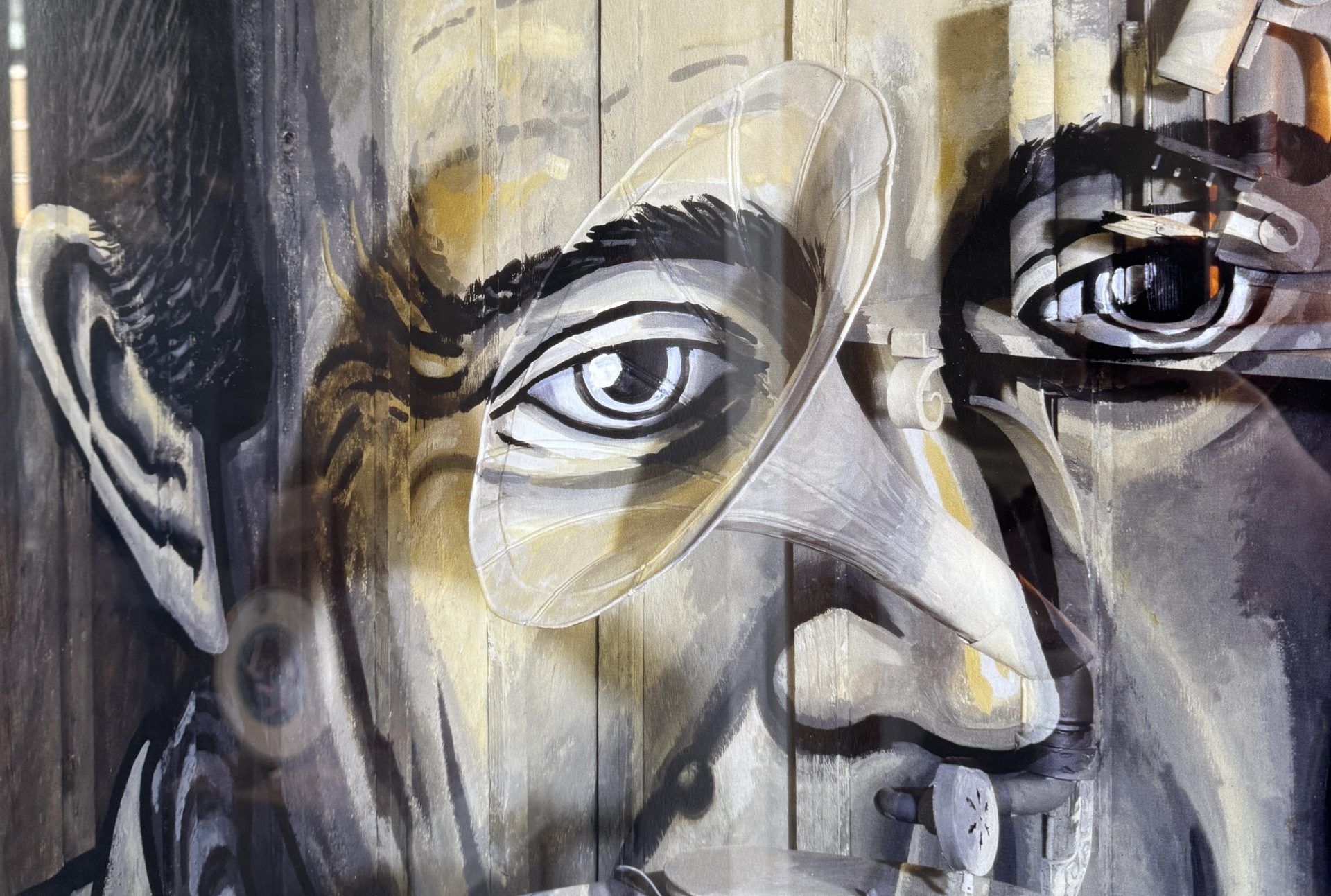
“The portraits are photographs of three-dimensional sets, which I’ve painted using trompe l’oeil technique – a technique that goes back to the Renaissance. In this instance I’ve employed the technique through the lens of the camera, as it were.”
Can you talk us through what we see in the photographs?
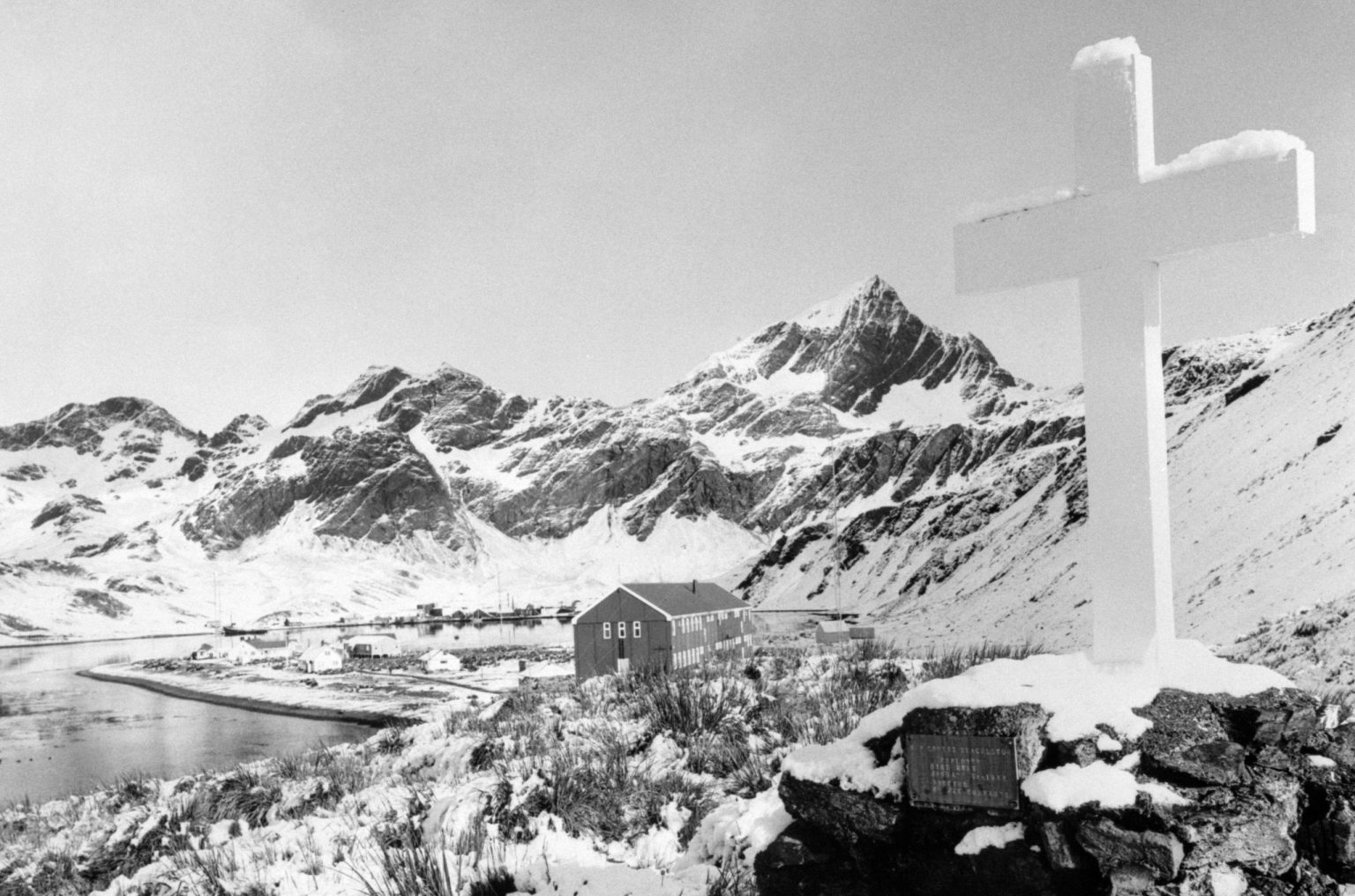
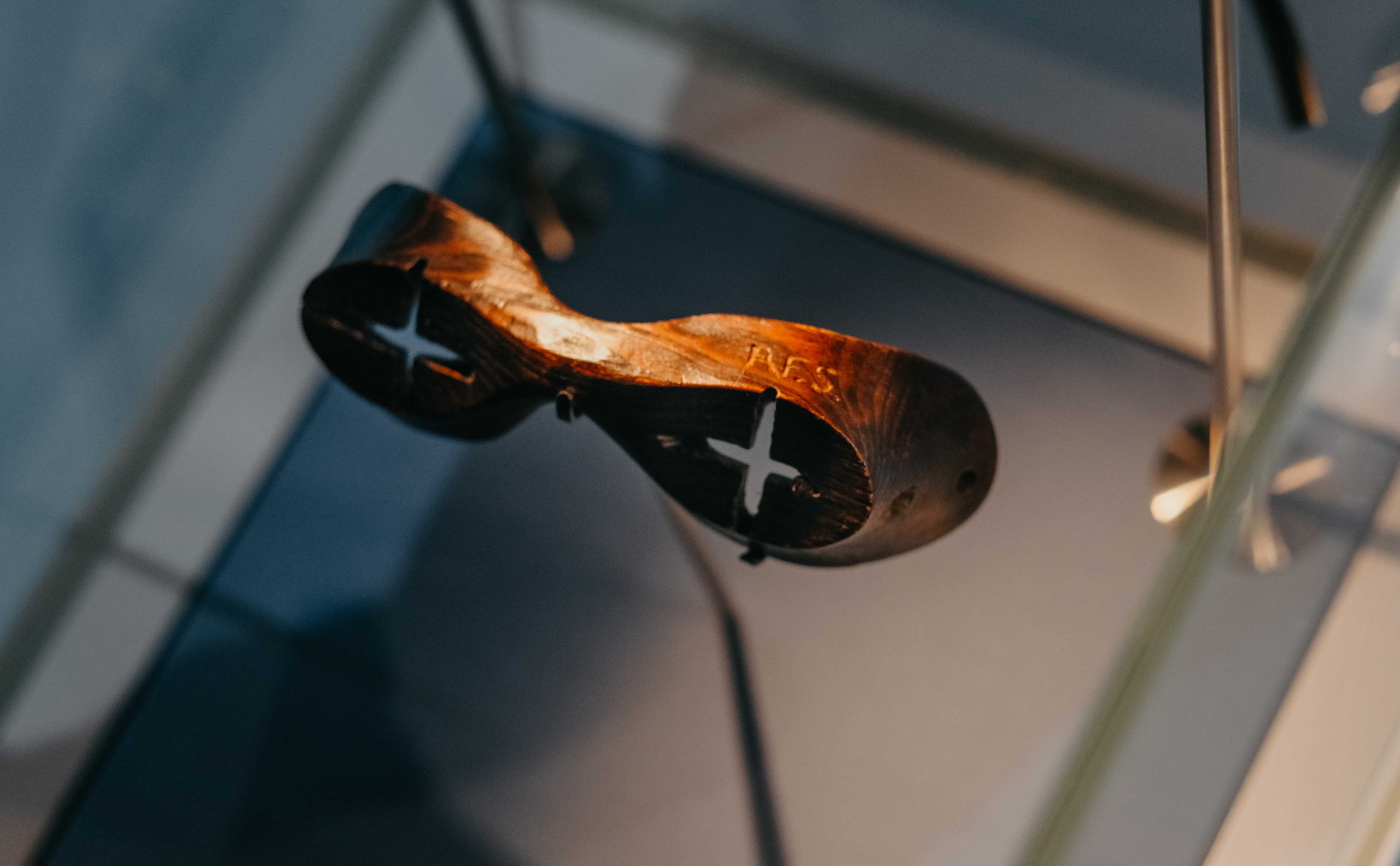
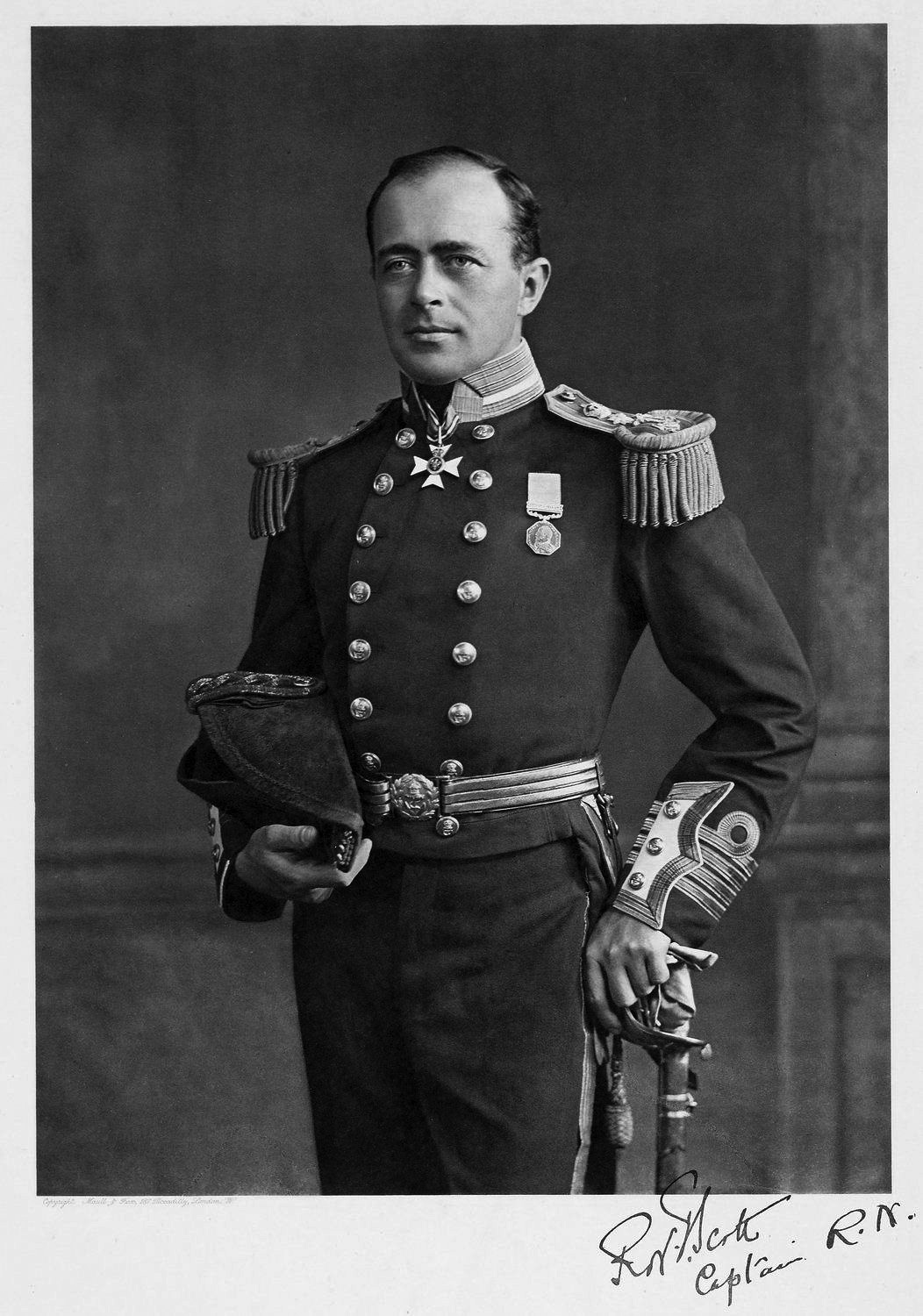
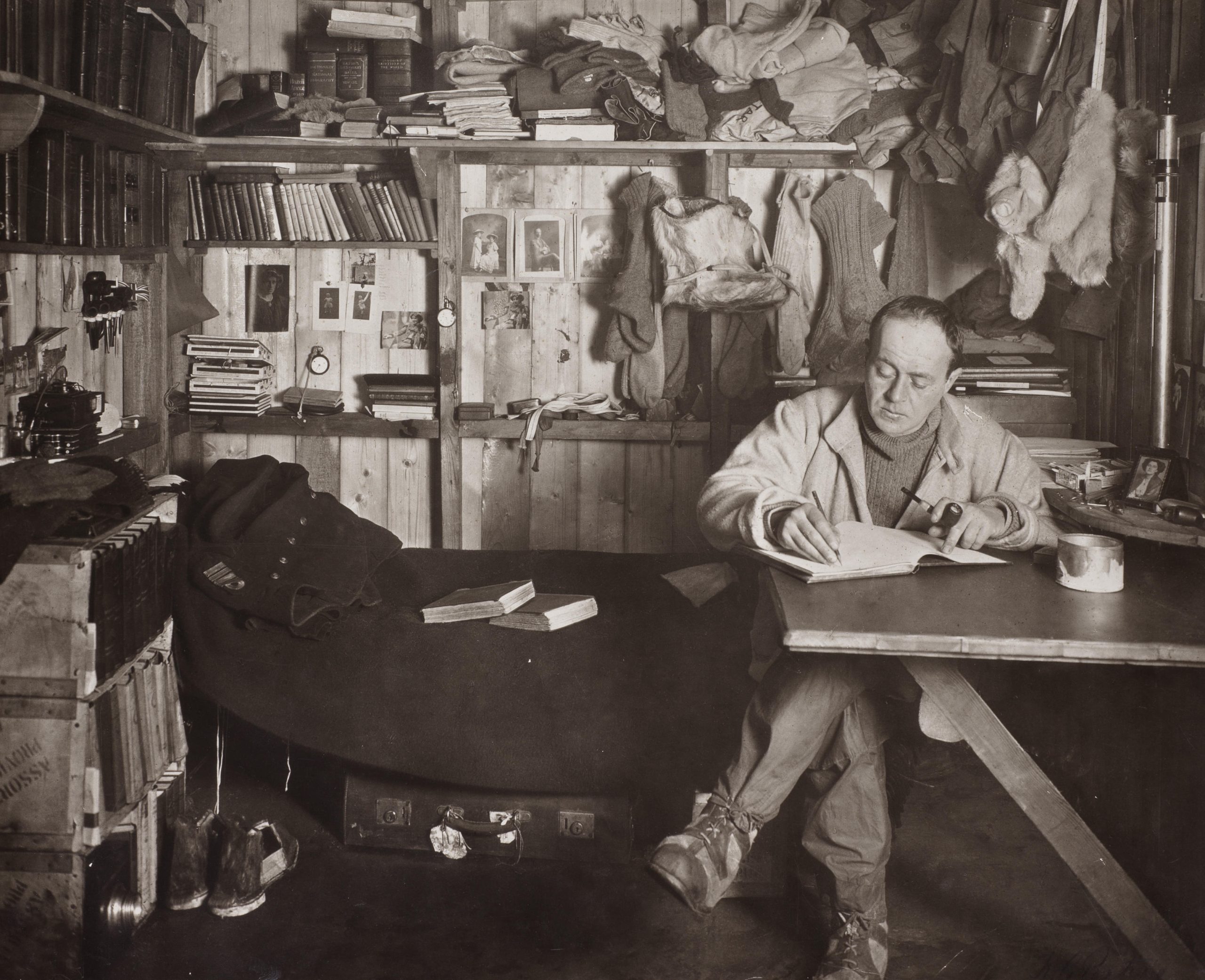
“In the picture of Robert Falcon Scott, he’s painted over some food crates, a gramophone, books, a telescope, a microscope, skis and such. The figure is painted three-dimensionally over the objects in the set which I made in the studio, making it look like the kind of hut that Scott and his comrades were in on their expeditions. The set includes lots of references to things that happened; there’s an image front page of the Daily Mirror with an image of the grave of Scott and his comrades. The idea of the gramophone was really about the idea of His Master’s Voice, and there are references to Scott’s naval background and the symbolic elements of his character.
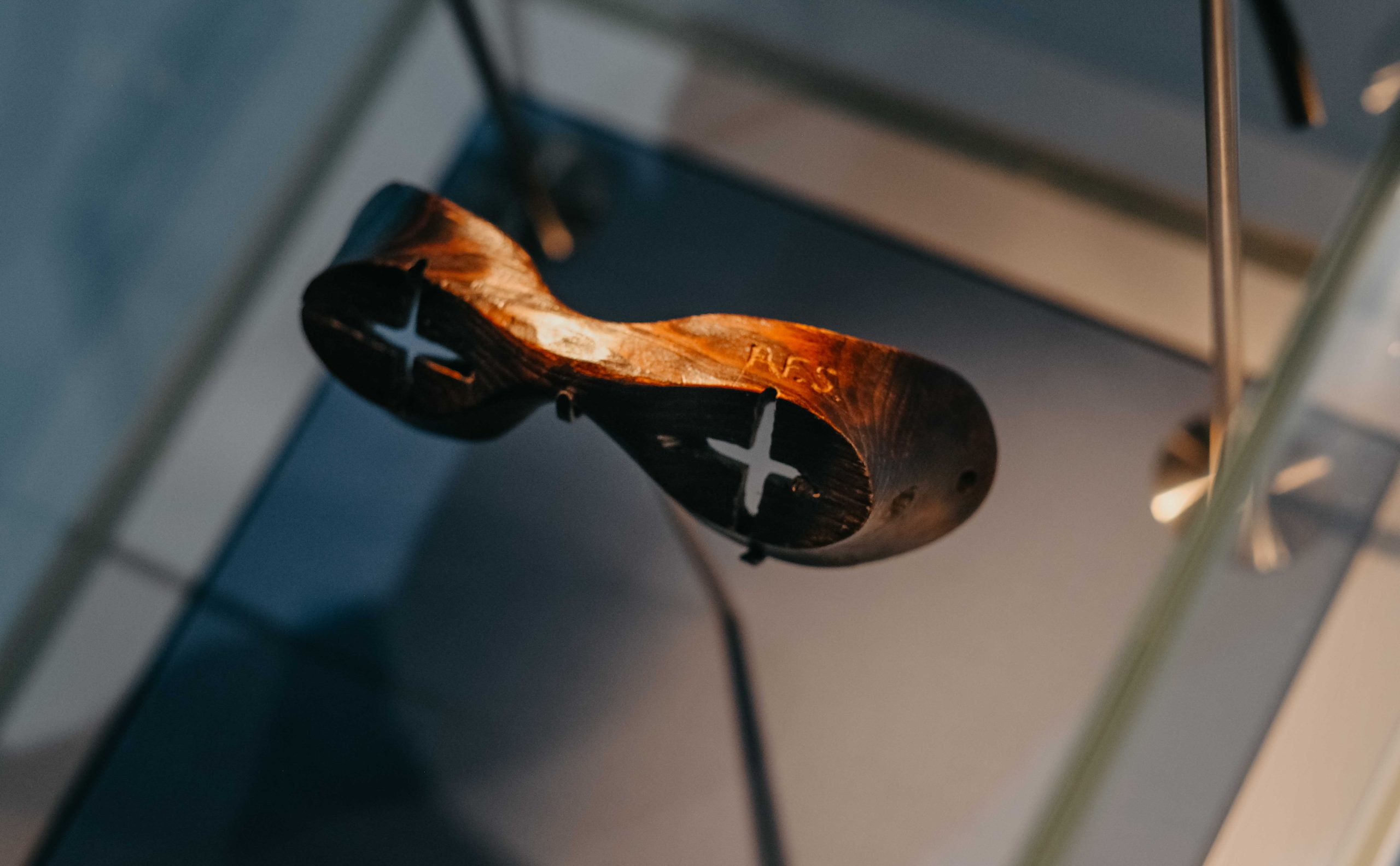
“There is so much detail to see in the picture. The viewer comes in, and they look and they think, “What is this? Am I looking at a photograph? Or is it a painting?”. You draw people in and they end up looking at all of the painted objects on the set that make up the photograph. When I was building the set, it was obviously a challenge to get objects that were be appropriate to the time of Scott’s expeditions. When I came up here to Discovery Point for research, I saw Scott’s wooden goggles – made with tiny slits for seeing out of – and made replicas for inclusion in the set.”
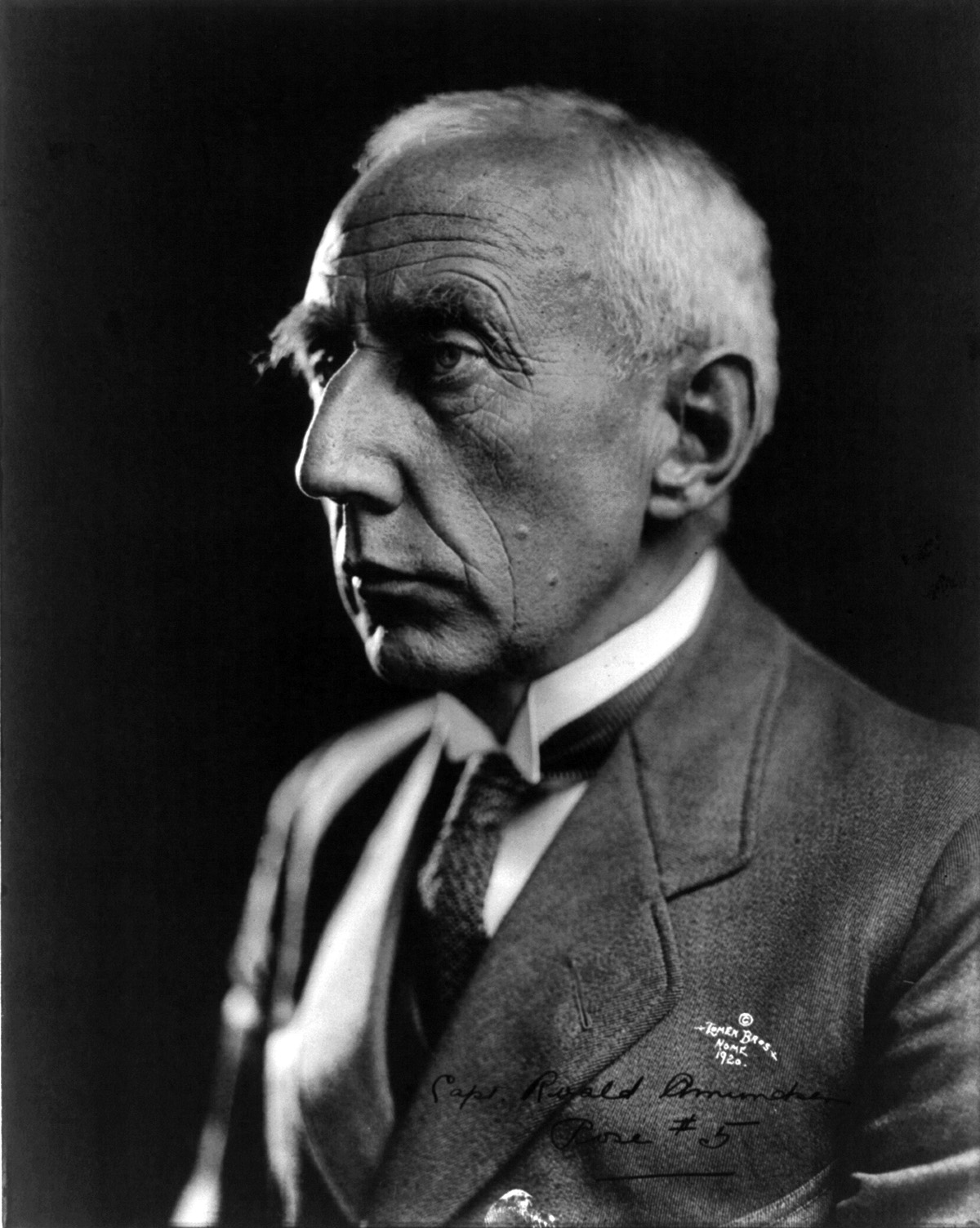
“A few years later, the same conglomerate came back to me and asked to create an image of Amundsen. So again, a similar process of research followed, including a visit to the Fram Museum in Oslo, which was very interesting. I got a sense of Amundsen as a person, and as a very, very good explorer. He’s more about the adventure of discovery rather than the science of discovery. A kind of driven character – the most incredibly intense and driven individual. I tried to get a sense of that in this image, showing him looking very eagle-eyed.”
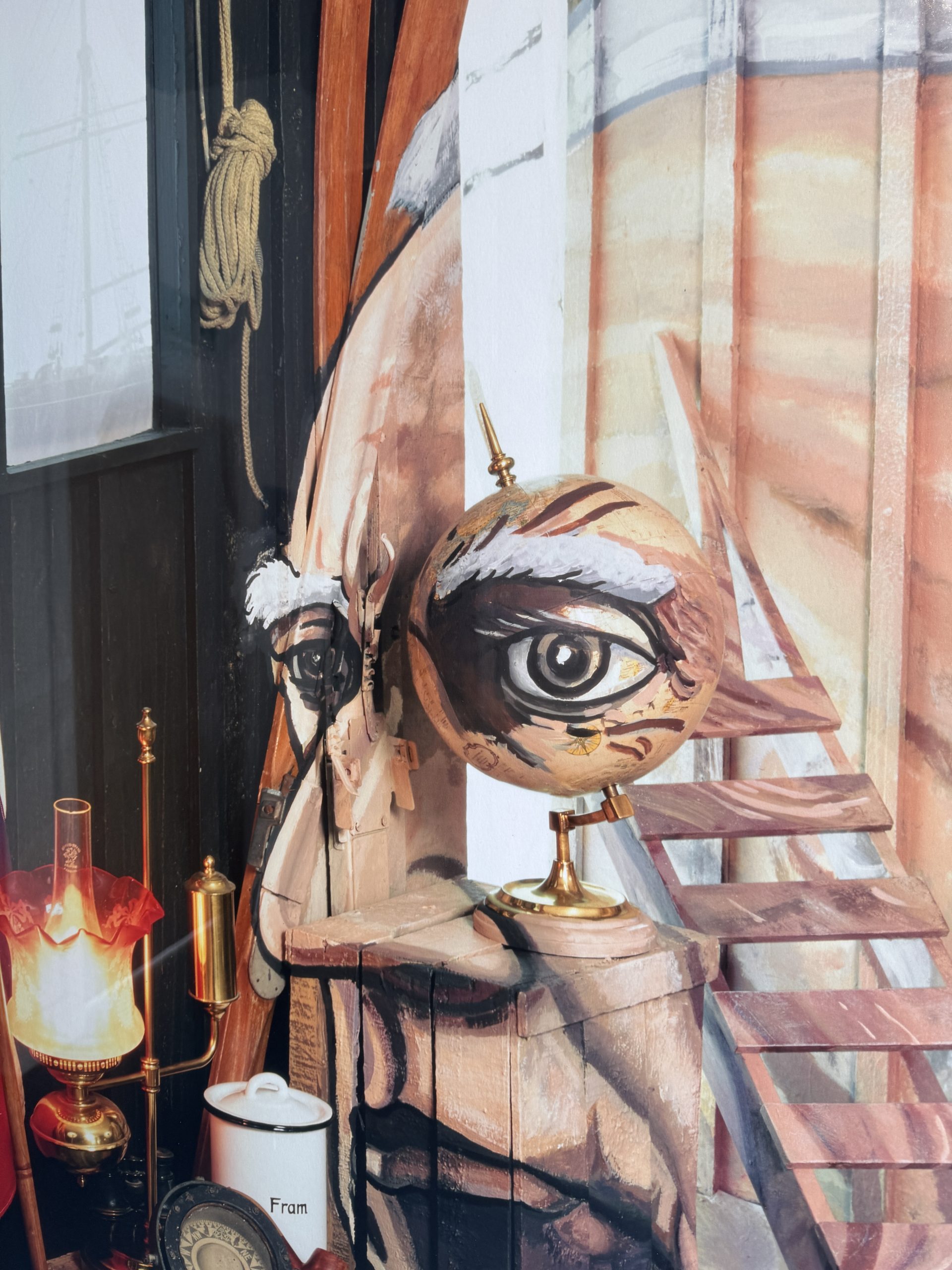
“I wanted also to bring the similarities in terms of what Scott and Amundsen were working with, and how they’re viewed in their own nations. There are flags, there’s a biscuit tin from the Fram, the glass globe, and a sledge – you can see the handles coming up. In the background, through haze, you can see the Gjøa, Amundsen’s Northwest Passage ship.
“I did design the two images knowing that they would sit together, and the people in the commission would sit together in their houses and they would be facing off each other. So, it’s great to see them here in Discovery Point, together – facing each other down.”
You talk about the differences in their character; were there any in particular that stuck with you?
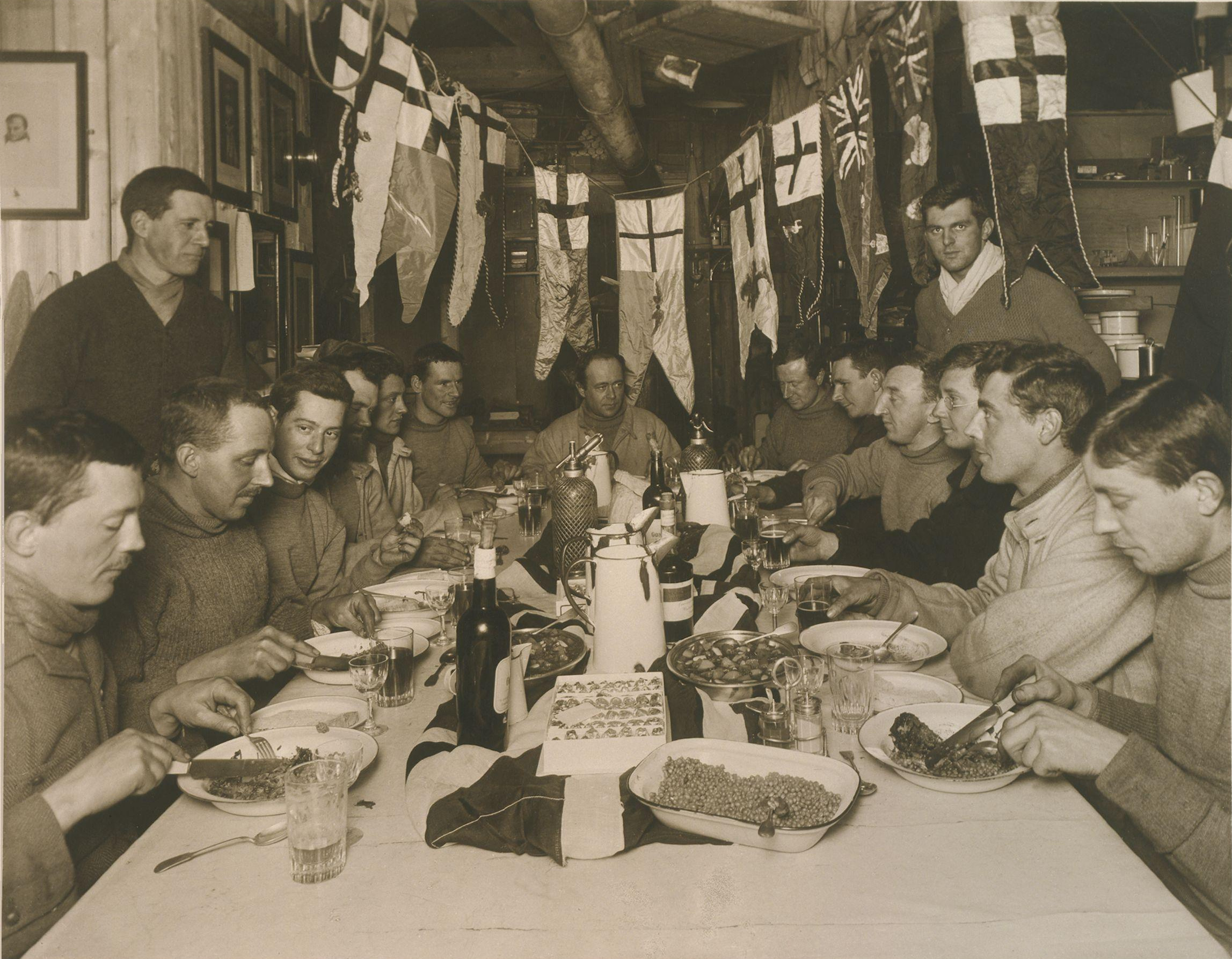
“I think one of the most effective things about Scott is the letters that he wrote. Right up to the very end, he wrote letters to his wife; they’re very moving, and he’s really quite poetic. He’s a very good writer, whereas Amundsen is a machine – he’s not really interested in the prose. He doesn’t have all the wonderful expedition photographs that Scott brings. Even at the end, Scott and his men were dragging rocks and geological specimens back in the name of science, whereas Amundsen was just about getting to the South Pole and the exploration. It’s about two different senses of discovery between the men.
“As I mentioned, during my research into Robert Falcon Scott, I made a trip to the Scott Polar Institute in Cambridge, and was looking for an image of Scott. When you’re creating historical portraits, it’s difficult because obviously you work with photographs and you want them to be taken from a certain angle, that you don’t always have the luxury of. You can also begin to tell which people didn’t like having their photo taken; Scott did not like having his photo taken, because there aren’t actually very many pictures of him and the ones that exist feel formal and quite stiff. I eventually found an image of him in which I felt that he looked more relaxed. Through that, I tried to get a sense of them as a character.”
It’s about two different senses of discovery between the men.
How do you take a reference photograph and turn it into an artwork?
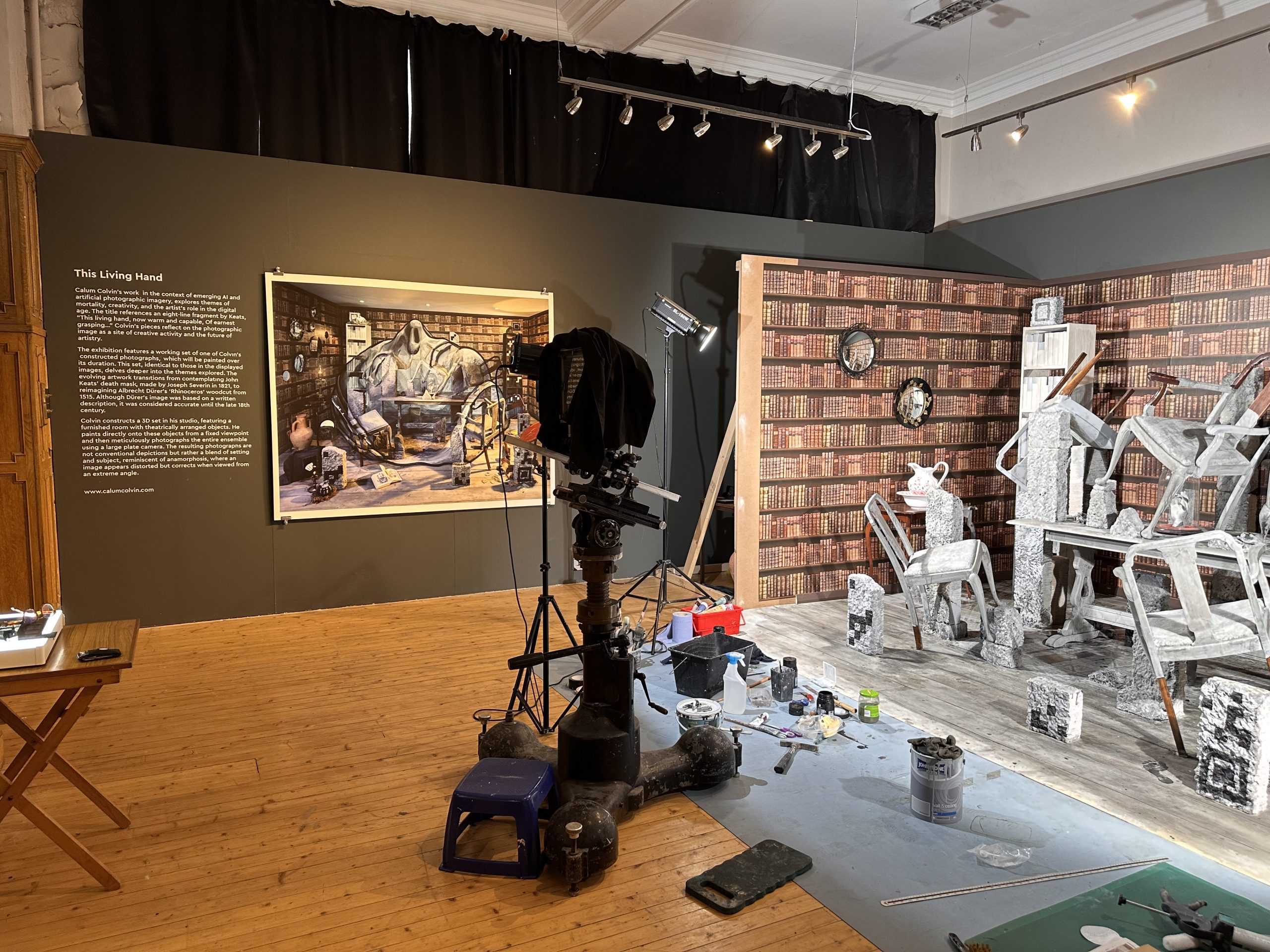
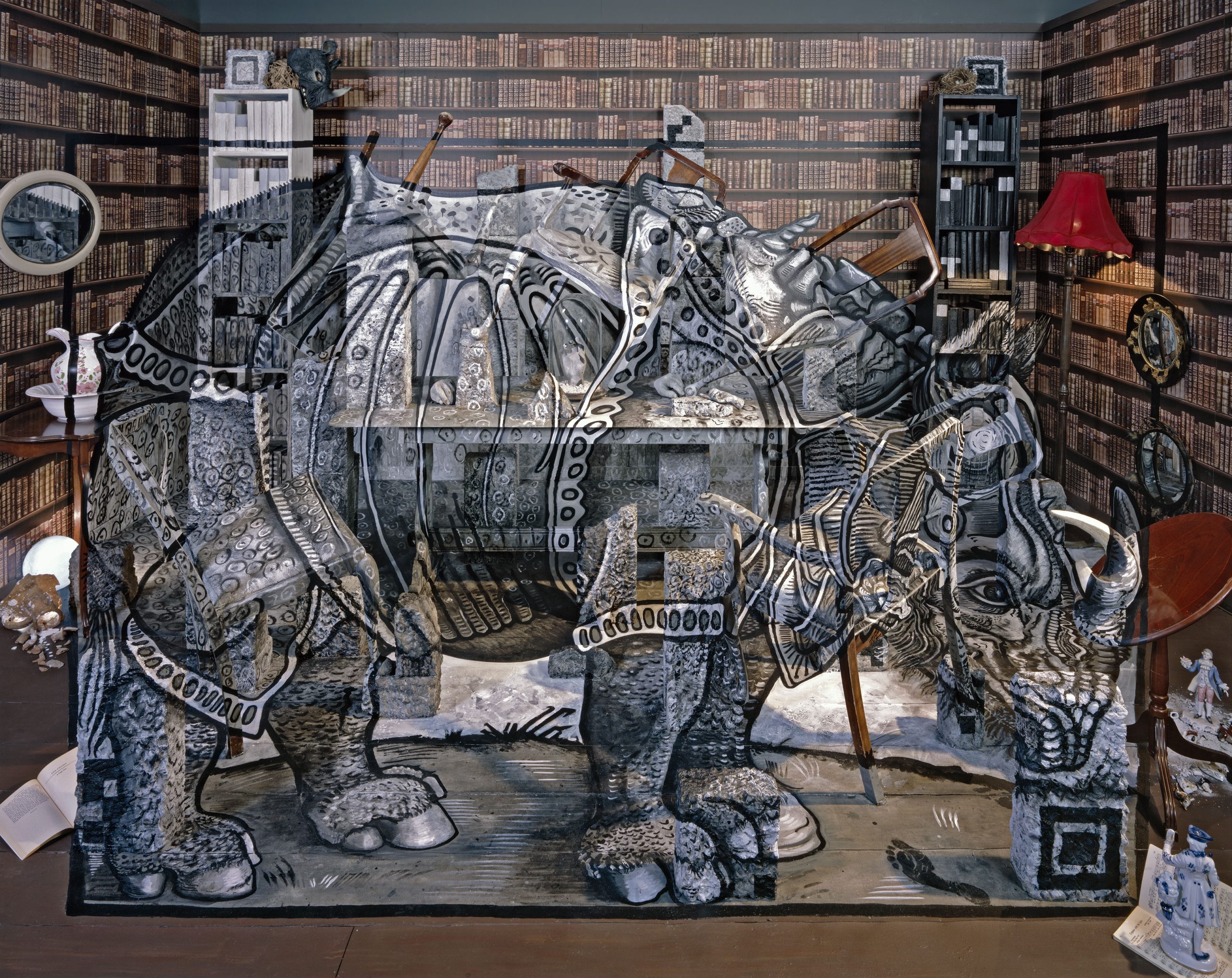
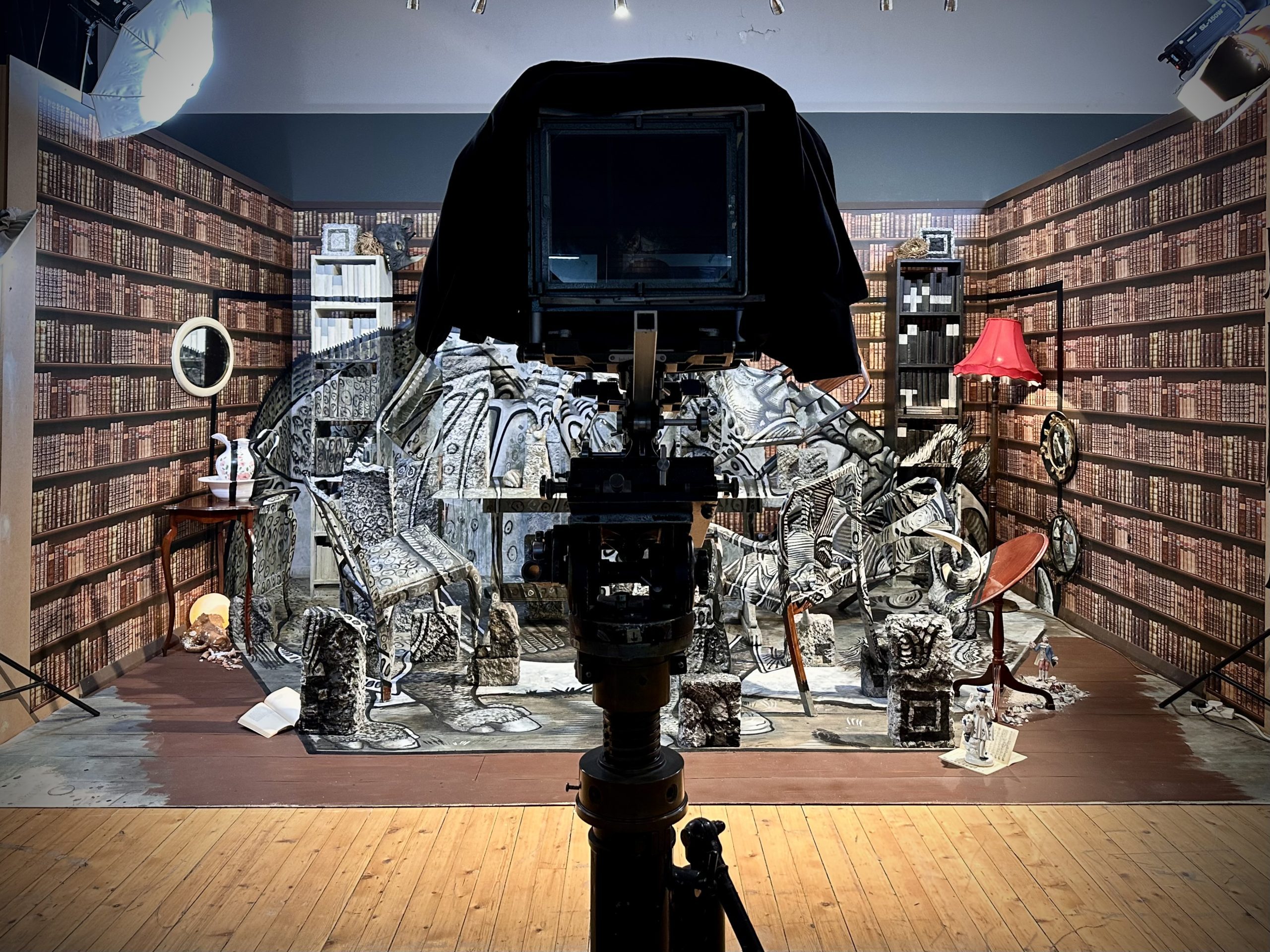
“Once I’ve found my image, I turn that photograph into a drawing, which I then put onto the back screen of my large format 10×8 film camera. Through the camera’s screen, I can see the three-dimensional set as I build it up – you can also shine a light through the camera to turn it into a projector. It’s a very long and slow process of making marks, coming back, building up, and then painting over the objects. Some things are easier to paint over than others.
“When you see the three-dimensional set from the side, the painting is all stretched and it’s all pulled out, and it only makes sense when you view it from the point of view of the camera. It takes a lot of months to build up, to go back and forwards, and then you’re combining it with the products. Some bits you paint, some bits you leave out, so you leave little things unpainted, because that also throws back the three-dimensional of your picture. If you overdo it, if it’s too accurate, then the viewer’s eye just skips past that and they don’t see it as a three-dimensional set – you need their eye to catch on the little faults. And then you have the lighting which plays off on that as well.
“It’s really a painted photograph. I always say that I am a photographer, because that’s the vehicle that goes through. But, my works are paintings and they’re collages, in some ways.”
You’ve worked on tens of portraits of historical figures, and I get the sense that being able to understand them is important. Are there any that have proven more difficult to read?
“That’s interesting, because I’ve created a number of historical characters over the years, and you have to do a lot of research, you have to read about them, you have to get some sense of their personalities, their achievements and what drives them.
“I really struggled with William McGonagall. I made a portrait of him for a show I did at the McManus Art Gallery and Museum and I just couldn’t get any sense of McGonagall at all. In fact, I began to think that maybe he was a very complex joke made-up by the people of Dundee because he just didn’t seem to have… I just couldn’t see his character, his personality. So, I ended up making that part of the picture. There isn’t actually much information about McGonagall as a person.
“Rabbie Burns is easy, because there’s so much information around. I did a portrait for the British Academy that included a portrait of Churchill, and that was easy as well because he’s quite iconic – in many ways, particularly now, he’s quite controversial. But sometimes you just focus on one aspect of their character. When I did the Churchill portrait, I focused on the notion of the war and his role in that and how he seemed there, rather than the more controversial things he was involved in.
“I think you have to be interested in the characters that you are depicting. I didn’t know anything about Scott and Amundsen until I was asked by Malcolm to make these images. And I did think, “What’s going to be the angle here?”.
“But, with each of them, I found that there are so many amazing stories of the remarkable lives that they lived, and it became quite a joy to do; really quite a journey for me.”
You can see Colvin’s pair of Polar portraits at Discovery Point until 2027.
-
 Museum admission21st Mar 2026 – 1st Mar 2027Discovery Point
Exhibition: Unseen Discoveries
Hidden gems from the 1901 Expedition are revealed from our Collections. -
Museum admission12th Sep 2025 – 13th Sep 2026Discovery Point
Exhibition: 100 Years of RRS Discovery
Discover the history of the Discovery Investigations, the wide range of roles involved in making ocean exploration possible, and what life is really like aboard a scientific expedition. -
Stories07/06/2024Discovery Point
Captain Robert Falcon Scott
Celebrating Captain Scott; one of the world’s most famous Polar explorers.

Keep in touch!
You’ll receive exclusive insights into our work behind-the-scenes at Discovery Point and Verdant Works Museum, be first to know about upcoming events and exhibitions and, discover how you can help support Dundee Heritage Trust. You can unsubscribe at any time.